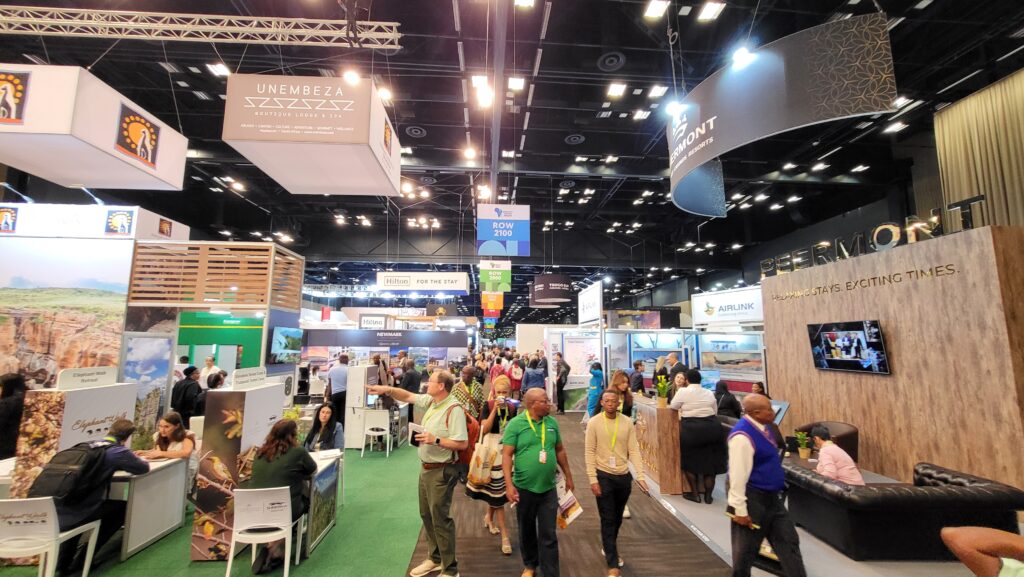
A hotel executive exploring conference expansion opportunities across East Africa settles into an early morning meeting with an investment manager searching for growth opportunities beyond Africa’s increasingly crowded capitals.
Nearby, a technology entrepreneur prepares a demonstration of an artificial intelligence platform designed for tourism businesses, while a county government delegation reviews plans for investor engagement sessions scheduled later in the day.
None of them have travelled to Nakuru to book a holiday, yet their conversations may reveal more about the future of African tourism than anything displayed on the exhibition floor.

When the Africa Tourism & Travel Fair (ATTF) 2026 opens at Nakuru Athletic Club from 2–5 September 2026, tourism operators, investors, financial institutions, technology firms, government agencies, creatives, hospitality businesses and development stakeholders are expected to converge on a city that is increasingly positioning itself as more than a stopover along Kenya’s tourism map.
Organized through a partnership between the Nakuru City Board and Owachi Africa, the fair arrives at a moment when tourism across Africa is being reshaped by forces extending far beyond visitor arrivals and destination marketing.
For Nakuru, the event represents part of a broader economic repositioning strategy. According to Gitau Thabanja, Manager of Nakuru City, the partnership reflects the city’s ambition to strengthen business networks, attract investment and showcase opportunities emerging at the intersection of tourism, innovation, culture and sustainable development.
The endorsement is significant not simply because Nakuru is hosting a tourism event, but because it reflects a growing realization among African cities that tourism platforms can function as instruments of economic positioning, commercial visibility and long-term investment attraction.
That ambition is easier to understand when viewed against the city’s evolving role within the region. For decades, Kenya’s tourism narrative largely revolved around Nairobi, the coast and internationally recognized wildlife destinations, while Nakuru developed its reputation as an agricultural powerhouse, logistics hub and administrative centre within the Rift Valley.
Today, however, the city is increasingly leveraging its location along one of East Africa’s most important transport corridors linking Nairobi with western Kenya and onward regional markets.
Expanding hospitality investment, improved transport infrastructure and growing conference capacity are gradually strengthening its ability to compete for regional events, business tourism and investment opportunities that were once concentrated almost exclusively in larger metropolitan centres.
Nakuru is not alone in pursuing this strategy. Across Africa, a growing number of secondary cities are seeking to position themselves as gateways for investment, innovation and business events.
Kigali has spent years building a reputation around meetings, incentives, conferences and exhibitions through strategic infrastructure investments and institutional coordination. Morocco has expanded business events and tourism activity beyond Casablanca and Marrakech into emerging regional centres, while destinations in Egypt, South Africa and Zambia continue experimenting with new models that combine tourism, investment promotion and urban competitiveness.
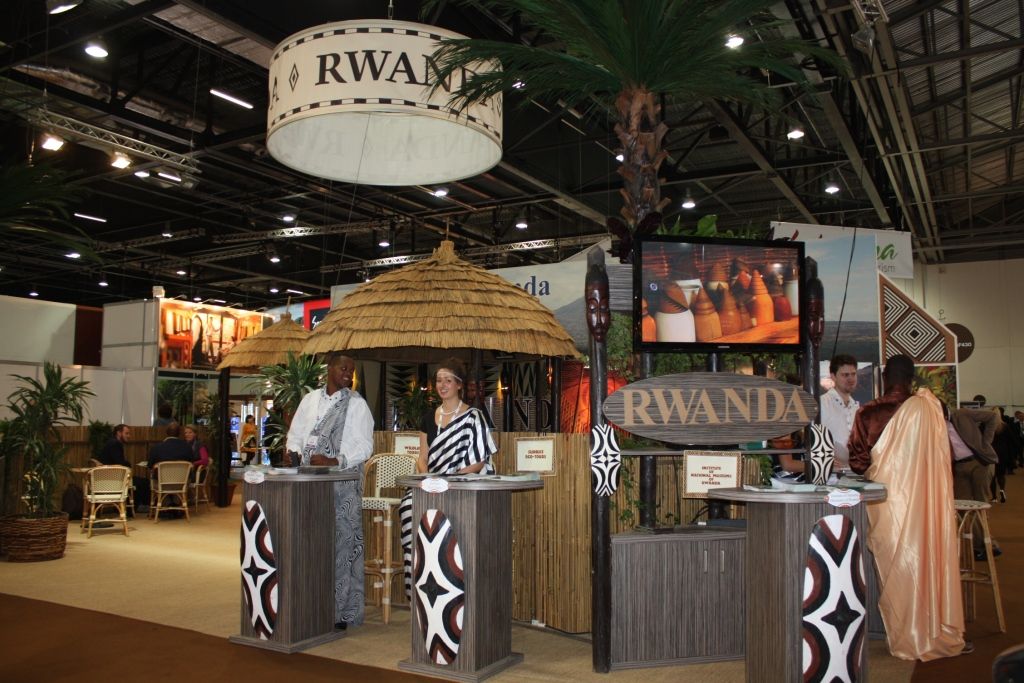
Although each city follows a different path, the underlying objective is increasingly similar: to use tourism platforms not merely to attract visitors but to strengthen economic relevance within wider regional networks.
That shift is also transforming the role of tourism trade fairs themselves. Historically, such events functioned primarily as marketing platforms where destinations promoted attractions, tour operators showcased products and travel businesses generated sales leads. Those functions remain important, but the world’s most influential tourism gatherings have evolved far beyond traditional exhibition models.
Events such as ITB Berlin, World Travel Market and Arabian Travel Market increasingly operate as commercial ecosystems where governments, investors, airlines, technology providers, hotel groups and destination managers negotiate partnerships, explore financing opportunities and shape future growth strategies long before travellers arrive at their chosen destinations.
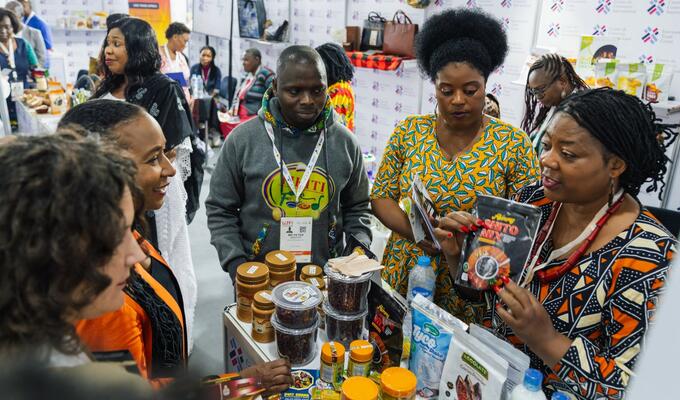
ATTF 2026 appears to be drawing from that same philosophy. Vincent Angatia, Managing Director of Owachi Africa Limited, believes tourism can no longer be treated as a standalone industry operating separately from the wider economy.
“The destinations that will lead African tourism over the next decade will not necessarily be those with the largest marketing budgets,” he says.
“They will be the destinations capable of connecting investors, technology innovators, cultural industries, governments and tourism businesses within the same economic ecosystem. That is the conversation ATTF is designed to facilitate.”
The structure of the fair reflects that thinking. Alongside destination promotion activities, the event is expected to host business networking engagements, investor interactions, technology showcases, cultural platforms and hosted buyer programmes designed to encourage relationships between sectors that have traditionally operated in parallel rather than together.
The objective is not simply to market destinations but to create an environment where investment opportunities, commercial partnerships and future projects can begin taking shape.
One of the most visible examples of that approach is the inclusion of an AI Village within the event. Artificial intelligence is rapidly becoming a competitive factor across the global tourism industry, influencing everything from airline route optimization and revenue management to visitor engagement, forecasting and destination intelligence.
While countries such as Kenya, Rwanda, Morocco, Egypt and South Africa have made notable progress in digital transformation, technology adoption remains uneven across much of the continent, particularly among small and medium-sized tourism enterprises that often face constraints related to financing, skills development and implementation capacity.

The significance of the AI Village therefore extends beyond technology demonstrations; it reflects a growing recognition that future tourism competitiveness may depend as much on data, intelligence systems and digital infrastructure as it does on attractions, accommodation capacity or marketing expenditure.
The event’s emphasis on cultural storytelling highlights another shift taking place across the tourism economy. For many years, culture was frequently positioned as a supporting attraction designed to enhance visitor experiences.
Increasingly, however, cultural assets are being recognized as economic resources capable of generating employment, investment, exports and destination differentiation.
The success of countries such as South Korea in integrating entertainment, tourism and cultural exports has demonstrated how creative industries can influence travel demand while simultaneously creating broader economic value.
Similar conversations are gaining momentum across Africa, where music, fashion, cuisine, festivals and creative content are becoming increasingly important components of tourism competitiveness.
For African destinations, the challenge is no longer simply achieving global visibility. It is ensuring that the economic value generated from African stories, heritage and creative assets remains within local economies rather than flowing disproportionately through external distribution channels.
Questions surrounding ownership, monetization, intellectual property and value retention are therefore becoming increasingly relevant to tourism boards, investors, policymakers and entrepreneurs alike. Within that context, cultural tourism is evolving from a branding exercise into a discussion about economic participation and long-term value creation.
Financial institutions are beginning to recognize a similar opportunity. Whether the objective is constructing a hotel, expanding conference infrastructure, financing a tourism startup, scaling a technology platform or modernizing transport services, every stage of the tourism value chain ultimately depends on access to capital.
As a result, banks, SACCOs and investment institutions are increasingly viewing tourism not as a seasonal leisure industry but as an interconnected economic sector linked to infrastructure development, enterprise growth, real estate, logistics, digital payments and regional mobility.
Their growing presence within tourism platforms reflects a recognition that tourism’s economic influence extends far beyond accommodation and visitor spending alone.
Taken together, these developments point toward a broader transformation unfolding across the continent. Governments are searching for new engines of growth, investors are exploring opportunities beyond traditional capitals, and cities are competing to attract businesses, talent and capital within an increasingly connected economy.
Tourism is gradually becoming one of the platforms through which those ambitions intersect, bringing together conversations about infrastructure, technology, entrepreneurship, culture and investment that previously occurred in separate arenas.
The opportunities are substantial, but so are the challenges. Technology adoption remains uneven, infrastructure gaps continue to constrain growth in many destinations and competition between cities is intensifying as governments seek to position themselves within emerging regional value chains. Visibility alone is no longer enough.
Cities must demonstrate their ability to convert attention into investment, partnerships and measurable economic outcomes if tourism-led development strategies are to deliver lasting benefits.
That is ultimately what makes the experiment unfolding in Nakuru worth watching. The long-term significance of ATTF 2026 is unlikely to be measured by the number of exhibition stands, promotional brochures or conference sessions delivered over four days.
Its true value may lie in the quality of the relationships established, the partnerships initiated and the opportunities discovered between people who might otherwise never have occupied the same room.

For Nakuru, the fair offers an opportunity to showcase a city seeking a larger role within East Africa’s economic future. For businesses, it provides access to potential partners, investors and clients.
For policymakers, it presents a practical illustration of how tourism can support wider development objectives. For Africa, however, it raises a much larger question: can tourism evolve from a sector focused primarily on attracting visitors into a platform capable of connecting investment, innovation, culture and economic transformation?
The answer will not emerge from a single exhibition hall or a single city. It will be shaped through thousands of conversations taking place across airports, boardrooms, innovation hubs, conference centres and investment forums throughout the continent.
Yet when delegates arrive in Nakuru this September, they will be participating in a discussion that extends far beyond tourism itself, one that increasingly touches on how African cities compete, how businesses grow and how economic opportunities are created in a rapidly changing world.
For readers following those shifts, the conversation continues beyond the fair through the wider Africa Tourism Summit ecosystem, where industry analysis, destination intelligence, executive interviews and market insights continue examining the forces reshaping African tourism and travel.
Ongoing updates are available through the Africa Tourism Summit website and newsletter, alongside professional discussions on LinkedIn, destination updates on Facebook, industry conversations on X and interviews, intelligence briefings and event coverage on YouTube, ensuring that the ideas emerging in Nakuru continue long after the exhibition halls have closed.